
- Home
- Healthcare
- Insulin market
Insulin Market Report- Global Strategic Analysis, Size, Share, Trend, and Forecast (2022-2029)

Basal Insulin Market Outlook (2025–2035)
The query appears to reference the basal insulin market, as the provided CAGR of 8.3% and projected market value of USD 44.6 billion in 2035 closely align with recent projections for this segment of the broader insulin market. Below is a comprehensive analysis based on current market data, focusing on global figures without regional breakdowns.
Market Size and Projections
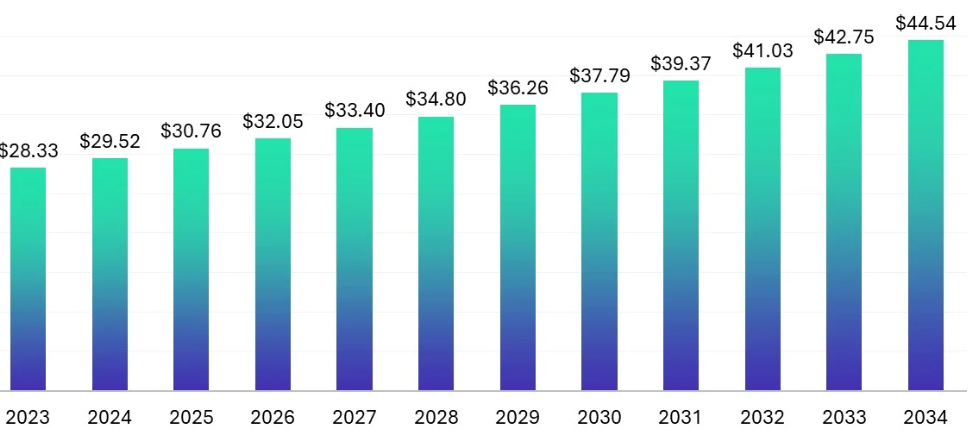
The global basal insulin market is forecasted to experience robust growth over the next decade. Starting from an estimated value of USD 20.12 billion in 2025, the market is projected to reach approximately USD 44.66 billion by 2035. This represents a compound annual growth rate (CAGR) of 8.3% during the period.
To illustrate the year-over-year progression assuming constant CAGR, the following table outlines projected market values (in USD million):
| Year | Projected Market Value (USD Million) |
|---|---|
| 2025 | 20,120 |
| 2026 | 21,790 |
| 2027 | 23,599 |
| 2028 | 25,557 |
| 2029 | 27,678 |
| 2030 | 29,976 |
| 2031 | 32,464 |
| 2032 | 35,158 |
| 2033 | 38,076 |
| 2034 | 41,237 |
| 2035 | 44,659 |
These projections are calculated based on the initial 2025 value and the stated CAGR, showing steady exponential growth.
Market Share
Market share data is primarily segmented by product type. In 2025, Insulin Glargine dominates with a 42% share of the global market. Other product types include Insulin Detemir, Insulin Degludec, Biosimilar Basal Insulin, and others, but specific shares for these are not detailed in available analyses. By 2035, shifts are expected due to varying growth rates: Insulin Glargine is projected to grow at a CAGR of 4.7%, while Insulin Degludec may see faster expansion at 12.0% CAGR, potentially increasing its relative share.
By diabetes type, Type 2 Diabetes accounts for the majority of demand, though exact percentage shares are not quantified. Type 1 Diabetes represents a smaller portion.
Key player market shares are not explicitly broken down in percentages, but the competitive landscape is led by a few major companies (detailed below).
Trends
- Shift Toward Advanced Formulations: There is increasing demand for once-weekly basal insulins and biosimilars, which offer affordability and convenience. Innovations like next-generation analogs, smart insulin pens, and integrated continuous glucose monitoring systems are enhancing precision and patient adherence.
- Technology Integration: Manufacturers are incorporating AI-based dose titration, digital monitoring, and sustainable production practices to improve cost-efficiency and user experience.
- Focus on Patient-Centric Solutions: Trends emphasize reduced hypoglycemia risks, improved adherence through interconnected devices (e.g., pens and patch pumps), and broader awareness campaigns.
Growth Drivers
- Rising Diabetes Prevalence: The global increase in Type 2 diabetes cases, driven by sedentary lifestyles, aging populations, and obesity, is a primary factor boosting demand for long-term glycemic control solutions like basal insulin.
- Convenience and Efficacy: Once-daily (or less frequent) dosing improves patient compliance and physician preference, with advanced analogs minimizing side effects like hypoglycemia.
- R&D and Funding: Significant investments in research, including new formulations and delivery technologies, along with expanded reimbursement programs and screening initiatives, are accelerating market expansion.
- Biosimilars and Accessibility: The emergence of cost-effective biosimilars is making treatments more accessible, particularly in high-burden areas.
Strategic Analysis
The basal insulin market is highly competitive, with players emphasizing innovation in long-acting formulations, digital integrations, and cost reduction to maintain or gain market position. Strategies include expanding product portfolios through R&D (e.g., once-weekly insulins), navigating regulatory approvals for biosimilars, and focusing on emerging economies for growth. Challenges such as manufacturing issues (e.g., recent FDA responses) and pricing pressures from biosimilars require agile adaptation. Overall, the market favors companies that prioritize patient adherence and sustainability.
Key Players
The market is dominated by a select group of pharmaceutical giants and emerging players:
- Novo Nordisk
- Sanofi
- Eli Lilly
- Biocon
- Pfizer
- Boehringer Ingelheim
- Others: Wockhardt, Julphar, Sedico, Merck, Sandoz, Viatris, Tonghua Dongbao
Recent developments include Eli Lilly's Phase III trials for once-weekly efsitora alfa in June 2025, demonstrating comparable efficacy to daily options, and FDA feedback on Novo Nordisk's insulin icodec in July 2024.
Table of Content
1. Market Overview
1.1 Research Methodology
1.2 Definitions and Scope
2.Market - Executive Summary
2.1 Market Opportunity
2.2 Key Trends by Product Segments
2.3 Key Trends by Geography
3. Insulin Market Landscape
3.1 Comparative analysis
3.1.1 Product Benchmarking - Top 10 companies
3.1.2 Top 5 Financials Analysis
3.1.3 Market Value split by Top 10 companies
3.1.4 Pricing Analysis
4. Market Forces
4.1 Market Drivers
4.2 Market Constraints
4.3 Market Challenges
4.4 Porter’s Five Forces
4.4.1 Bargaining Power of Suppliers
4.4.2 Bargaining Power of Consumers
4.4.3 Threat of New Entrants
4.4.4 Threat of Substitute Products and Services
4.4.5 Degree of Competition
5. Insulin Market - Strategic Analysis
5.1 Value Chain
5.2 Opportunity
5.3 Patent Analysis
6. Global Insulin Market Outlook
6.1 Global Insulin Market Outlook, by Type, 2019-2029
6.2 Global Insulin Market Outlook, by Application, 2019-2029
7. Asia Pacific Insulin Market Outlook
7.1 Key Snapshot
7.2 Asia Pacific Insulin Market Outlook, by Type, 2019-2029
7.3 Asia Pacific Insulin Market Outlook, by Application, 2019-2029
7.4 Asia Pacific Insulin Market Outlook, by Country, 2019-2029
8. North America Insulin Market Outlook
8.1 Key Snapshot
8.2 North America Insulin Market Outlook, by Type, 2019-2029
8.3 North America Insulin Market Outlook, by Application, 2019-2029
8.4 North America Insulin Market Outlook, by Country, 2019-2029
9. Europe Insulin Market Outlook
9.1 Key Snapshot
9.2 Europe Insulin Market Outlook, by Type, 2019-2029
9.3 Europe Insulin Market Outlook, by Application, 2019-2029
9.4 Europe Insulin Market Outlook, by Country, 2019-2029
10. Latin America Insulin Market Outlook
10.1 Key Snapshot
10.2 Latin America Insulin Market Outlook, by Type, 2019-2029
10.3 Latin America Insulin Market Outlook, by Application, 2019-2029
10.4 Latin America Insulin Market Outlook, by Country, 2019-2029
11. Middle East and Africa Insulin Market Outlook
11.1 Key Snapshot
11.2 Middle East and Africa Insulin Market Outlook, by Type, 2019-2029
11.3 Middle East and Africa Insulin Market Outlook, by Application, 2019-2029
11.4 Middle East and Africa Insulin Market Outlook, by Country, 2019-2029
12. Insulin Market -Entropy
12.1 New Product Launches
12.2 M&A, Collaborations, JVs, and Partnerships
13. Insulin Market Company Analysis
13.1 Market Share Analysis, Financial Analysis, Product Synopsis, Recent News and Developments
13.2 Company 1
13.3 Company 2
13.4 Company 3
13.5 Company 4
13.6 Company 5
13.7 Company 6
13.8 Company 7
13.9 Company 8
13.10 Company 9
13.11 Company 10
Related Reports
-
Laser Dentistry Devices Market Report- Global Strategic Analysis, Size, Share, Trend, and Forecast (2025-2035)
- Published: July, 2025
- Price: $2950
- Sample Request
-
Meditation Market Report- Global Strategic Analysis, Size, Share, Trend, and Forecast (2025-2035)
- Published: July, 2025
- Price: $2950
- Sample Request
-
Point-of-Care Biopsy Market Report- Global Strategic Analysis, Size, Share, Trend, and Forecast (2025-2035)
- Published: July, 2025
- Price: $2950
- Sample Request
-
Pediatric Patient Handling Equipment Market Report- Global Strategic Analysis, Size, Share, Trend, and Forecast (2025-2035)
- Published: July, 2025
- Price: $2950
- Sample Request