
- Home
- Healthcare
- Negative Pressure Wound Therapy market
Negative Pressure Wound Therapy Market Report- Global Strategic Analysis, Size, Share, Trend, and Forecast (2022-2029)

Market Size and Forecast (2025–2035)
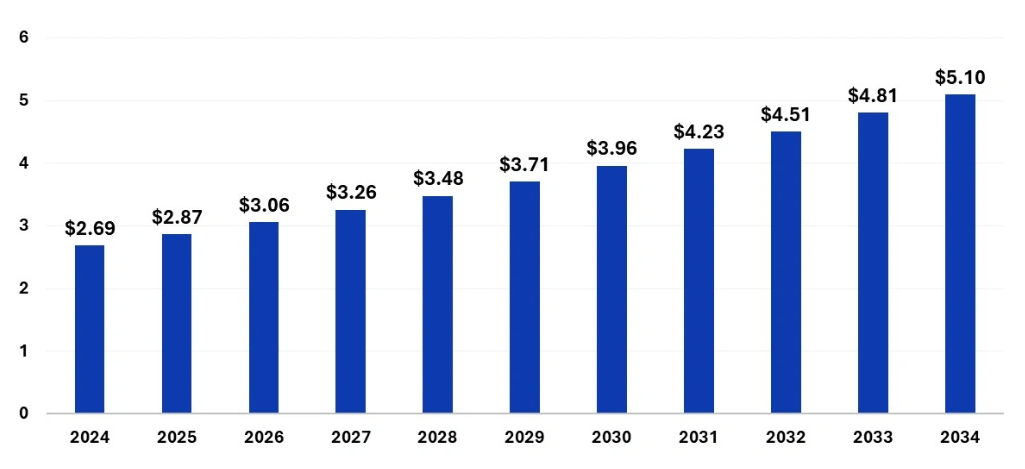
The negative pressure wound therapy (NPWT) market is projected to grow steadily over the forecast period, starting from approximately USD 2.86 billion in 2025 and reaching USD 5.47 billion by 2035, driven by a compound annual growth rate (CAGR) of 6.7%. This growth is supported by increasing incidences of chronic wounds and advancements in portable NPWT systems.
To illustrate the year-over-year growth, the following table presents projected market values, calculated based on the specified CAGR applied progressively from the 2025 base value:
| Year | Projected Market Value (USD Billion) |
|---|---|
| 2025 | 2.86 |
| 2026 | 3.05 |
| 2027 | 3.26 |
| 2028 | 3.47 |
| 2029 | 3.71 |
| 2030 | 3.96 |
| 2031 | 4.22 |
| 2032 | 4.50 |
| 2033 | 4.80 |
| 2034 | 5.13 |
| 2035 | 5.47 |
Note: Values are rounded to two decimal places and derived from annual compounding at 6.7%.
Market Share by Segments
The NPWT market is segmented by product type, wound type, and end-user. Conventional NPWT devices dominate due to their established efficacy in hospital settings, while single-use devices are gaining share for convenience in home care. Surgical and open wounds represent the largest application segment, reflecting the therapy's role in post-operative care.
The following table summarizes estimated market shares by key segments (based on recent industry data, projected trends toward 2035):
| Segment Category | Sub-Segment | Estimated Market Share (%) |
|---|---|---|
| Product Type | Conventional NPWT Devices | 65% |
| Single-Use NPWT Devices | 25% | |
| Accessories | 10% | |
| Wound Type | Surgical & Open Wounds | 35% |
| Diabetic Foot Ulcers | 25% | |
| Pressure Ulcers | 20% | |
| Venous Ulcers | 10% | |
| Traumatic Wounds | 10% | |
| End-User | Hospitals | 55% |
| Home Care Settings | 30% | |
| Clinics & Others | 15% |
These shares highlight the prominence of conventional devices in treating surgical wounds, with a growing emphasis on home-based applications.
Trends
Key trends shaping the NPWT market include:
- Shift Toward Single-Use and Portable Devices: Increasing demand for disposable, lightweight systems to support home care and reduce infection risks.
- Integration of Advanced Technologies: Adoption of smart NPWT with connectivity for remote monitoring and real-time data analytics.
- Focus on Chronic Wound Management: Rising use in diabetic and pressure ulcers amid growing chronic disease prevalence.
- Sustainability Initiatives: Development of eco-friendly materials and reusable components to address environmental concerns.
- Market Consolidation: Increased mergers and acquisitions to expand product portfolios and enhance innovation.
Growth Drivers
The market's expansion is fueled by several key drivers:
- Rising Prevalence of Chronic Wounds: Increasing cases of diabetes, obesity, and venous diseases driving demand for effective wound healing solutions.
- Aging Population: Global demographic shifts leading to higher incidences of pressure ulcers and surgical wounds in the elderly.
- Technological Advancements: Innovations in portable and single-use NPWT improving patient compliance and outcomes.
- Favorable Reimbursement Policies: Enhanced insurance coverage for NPWT in home care settings boosting accessibility.
- Increase in Surgical Procedures: Growing number of surgeries worldwide necessitating advanced wound management.
Key Players
The competitive landscape features major players focusing on R&D, product launches, and strategic partnerships. Prominent companies include:
- 3M Company (Acelity)
- Smith & Nephew plc
- Mölnlycke Health Care AB
- Cardinal Health, Inc.
- ConvaTec Group Plc
- Paul Hartmann AG
- Medela AG
- Talley Group Limited
- Lohmann & Rauscher International GmbH & Co. KG
- DeRoyal Industries, Inc.
These firms lead through innovations in single-use devices and expansions in home care solutions.
Strategic Analysis
Strategically, the NPWT market emphasizes value chain optimization from device manufacturing to end-user distribution, with a focus on cost-effective single-use options and digital integration for better wound monitoring. Opportunities include patent-driven advancements in smart NPWT and partnerships for market penetration in home care. Competitive strategies involve acquisitions to consolidate shares, pricing adjustments for affordability, and R&D for chronic wound-specific solutions. Challenges such as high initial costs and regulatory hurdles exist, but untapped potential in emerging wound types and home-based therapies supports long-term growth.
Table of Content
1. Market Overview
1.1 Research Methodology
1.2 Definitions and Scope
2.Market - Executive Summary
2.1 Market Opportunity
2.2 Key Trends by Product Segments
2.3 Key Trends by Geography
3. Negative Pressure Wound Therapy Market Landscape
3.1 Comparative analysis
3.1.1 Product Benchmarking - Top 10 companies
3.1.2 Top 5 Financials Analysis
3.1.3 Market Value split by Top 10 companies
3.1.4 Pricing Analysis
4. Market Forces
4.1 Market Drivers
4.2 Market Constraints
4.3 Market Challenges
4.4 Porter’s Five Forces
4.4.1 Bargaining Power of Suppliers
4.4.2 Bargaining Power of Consumers
4.4.3 Threat of New Entrants
4.4.4 Threat of Substitute Products and Services
4.4.5 Degree of Competition
5. Negative Pressure Wound Therapy Market - Strategic Analysis
5.1 Value Chain
5.2 Opportunity
5.3 Patent Analysis
6. Global Negative Pressure Wound Therapy Market Outlook
6.1 Global Negative Pressure Wound Therapy Market Outlook, by Type, 2019-2029
6.2 Global Negative Pressure Wound Therapy Market Outlook, by Application, 2019-2029
7. Asia Pacific Negative Pressure Wound Therapy Market Outlook
7.1 Key Snapshot
7.2 Asia Pacific Negative Pressure Wound Therapy Market Outlook, by Type, 2019-2029
7.3 Asia Pacific Negative Pressure Wound Therapy Market Outlook, by Application, 2019-2029
7.4 Asia Pacific Negative Pressure Wound Therapy Market Outlook, by Country, 2019-2029
8. North America Negative Pressure Wound Therapy Market Outlook
8.1 Key Snapshot
8.2 North America Negative Pressure Wound Therapy Market Outlook, by Type, 2019-2029
8.3 North America Negative Pressure Wound Therapy Market Outlook, by Application, 2019-2029
8.4 North America Negative Pressure Wound Therapy Market Outlook, by Country, 2019-2029
9. Europe Negative Pressure Wound Therapy Market Outlook
9.1 Key Snapshot
9.2 Europe Negative Pressure Wound Therapy Market Outlook, by Type, 2019-2029
9.3 Europe Negative Pressure Wound Therapy Market Outlook, by Application, 2019-2029
9.4 Europe Negative Pressure Wound Therapy Market Outlook, by Country, 2019-2029
10. Latin America Negative Pressure Wound Therapy Market Outlook
10.1 Key Snapshot
10.2 Latin America Negative Pressure Wound Therapy Market Outlook, by Type, 2019-2029
10.3 Latin America Negative Pressure Wound Therapy Market Outlook, by Application, 2019-2029
10.4 Latin America Negative Pressure Wound Therapy Market Outlook, by Country, 2019-2029
11. Middle East and Africa Negative Pressure Wound Therapy Market Outlook
11.1 Key Snapshot
11.2 Middle East and Africa Negative Pressure Wound Therapy Market Outlook, by Type, 2019-2029
11.3 Middle East and Africa Negative Pressure Wound Therapy Market Outlook, by Application, 2019-2029
11.4 Middle East and Africa Negative Pressure Wound Therapy Market Outlook, by Country, 2019-2029
12. Negative Pressure Wound Therapy Market -Entropy
12.1 New Product Launches
12.2 M&A, Collaborations, JVs, and Partnerships
13. Negative Pressure Wound Therapy Market Company Analysis
13.1 Market Share Analysis, Financial Analysis, Product Synopsis, Recent News and Developments
13.2 Company 1
13.3 Company 2
13.4 Company 3
13.5 Company 4
13.6 Company 5
13.7 Company 6
13.8 Company 7
13.9 Company 8
13.10 Company 9
13.11 Company 10
Related Reports
-
Laser Dentistry Devices Market Report- Global Strategic Analysis, Size, Share, Trend, and Forecast (2025-2035)
- Published: July, 2025
- Price: $2950
- Sample Request
-
Meditation Market Report- Global Strategic Analysis, Size, Share, Trend, and Forecast (2025-2035)
- Published: July, 2025
- Price: $2950
- Sample Request
-
Point-of-Care Biopsy Market Report- Global Strategic Analysis, Size, Share, Trend, and Forecast (2025-2035)
- Published: July, 2025
- Price: $2950
- Sample Request
-
Pediatric Patient Handling Equipment Market Report- Global Strategic Analysis, Size, Share, Trend, and Forecast (2025-2035)
- Published: July, 2025
- Price: $2950
- Sample Request